
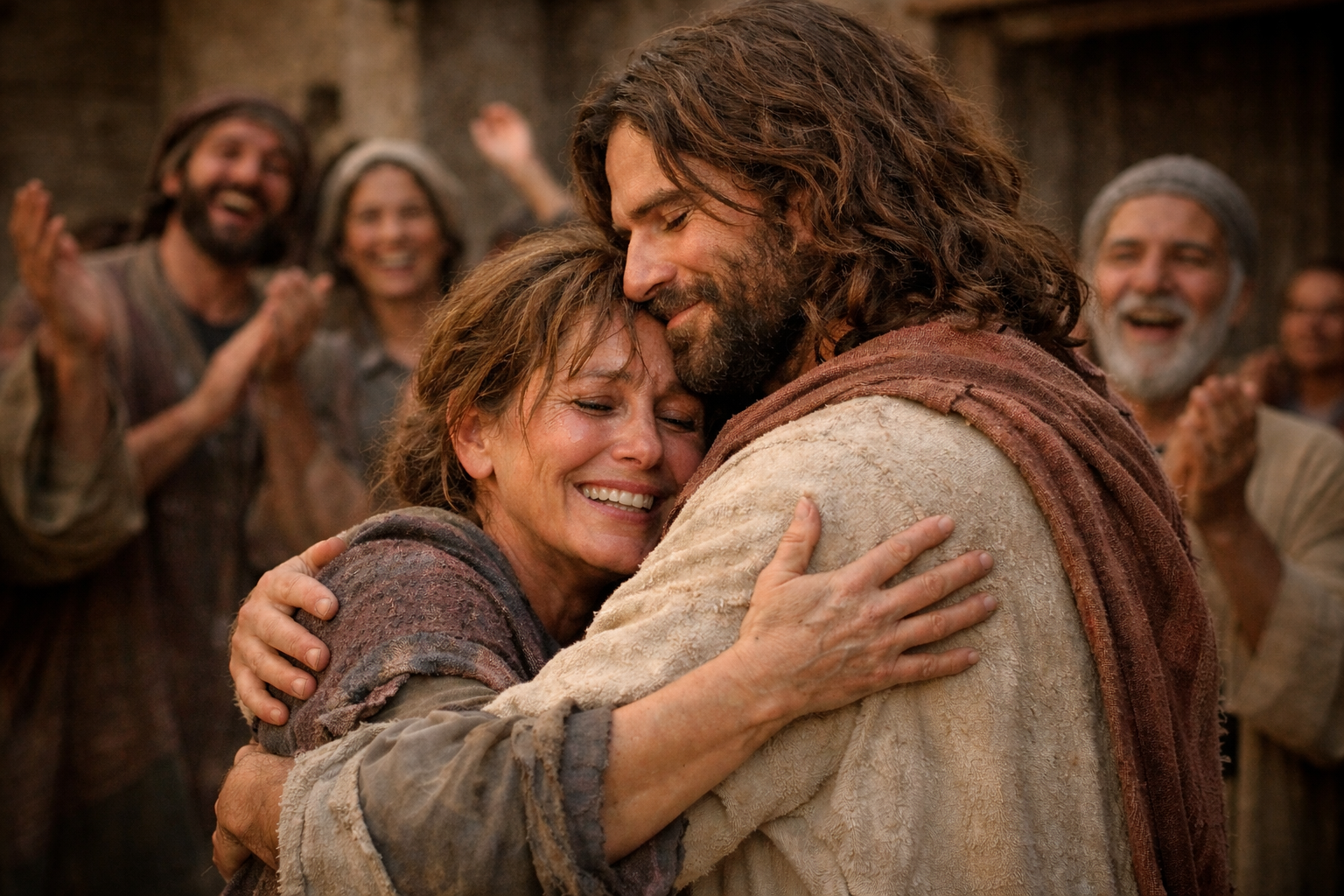
“The tax collectors and prostitutes will get into the kingdom of God before you.”
A Testimony Song of Redemption and Royal Identity.
In Matthew 21:31, Jesus is speaking to the chief priests and elders, the religious leaders who were respected, educated, and outwardly “righteous.” On the surface, they looked like the most spiritual people in Israel.
Yet Jesus says:
“The tax collectors and prostitutes will get into the kingdom of God before you.”
Why would He say that?
Few transformations in Scripture are more powerful than the journey from shame to royal identity. The gospel does not merely forgive sin—it restores dignity, renews purpose, and reveals a person’s true origin and destiny. The redeemed believer is not simply pardoned; she is reborn, restored, and welcomed into the household of the King of Kings. This is the story behind the testimony song Daughter of the King. It reflects the profound biblical truth that those once defined by brokenness are now defined by divine sonship and daughtership.
This transformation is not symbolic only—it is relational, legal, and eternal. Through Christ, those once lost become children of God, heirs of His kingdom, and participants in His royal family.
Created by the King: Identity Begins with Divine Origin
Before redemption, there was creation. Every human being was formed by God Himself. Scripture declares:
“For You formed my inward parts; You knitted me together in my mother’s womb.” (Psalm 139:13)
This means identity begins not with human failure, but with divine intention. Every person was created by the King of the universe. He is not only the ruler of creation but its source. He spoke the galaxies into existence, and yet He also personally formed each human life.
Because of this, human worth is not based on past actions, social standing, or personal history. It is rooted in the Creator Himself. To be made by the King is to carry intrinsic dignity. Even when that dignity is buried beneath sin, shame, or suffering, it is never erased.
The testimony of redemption begins with this truth: she was always His creation, even before she knew Him.
Lost but Not Abandoned: The Reality of Brokenness
Scripture is honest about human brokenness. Many have lived in darkness, making choices that wounded themselves and others. Some, like the woman in the testimony song, were known publicly for their sin. Their identity became defined by their failure rather than by their Creator.
Yet Scripture reveals something extraordinary: God never abandoned them.
Jesus declared:
“The Son of Man came to seek and to save the lost.” (Luke 19:10)
The lost are not ignored. They are sought. The broken are not discarded. They are pursued.
This pursuit reveals the heart of God. He does not love people after they are restored. He restores people because He loves them.
Redeemed by Love: Forgiveness That Restores, Not Merely Covers
Forgiveness in Christ is not partial or temporary. It is complete and transformative. Through His death and resurrection, Jesus removes guilt, restores relationship, and renews identity.
Scripture declares:
“If anyone is in Christ, he is a new creation; the old has passed away, behold, the new has come.” (2 Corinthians 5:17)
This is more than moral improvement. It is spiritual rebirth.
The redeemed person is not merely a forgiven sinner. She is a new creation. Her past no longer defines her. Her shame no longer owns her. Her chains no longer bind her.
The testimony song reflects this moment of transformation—the moment when shame loses its authority and grace establishes a new identity.
Adopted into Royalty: Becoming a Daughter of the King
Perhaps the most astonishing truth of redemption is adoption. God does not simply forgive; He welcomes.
Scripture proclaims:
“To all who received Him, He gave the right to become children of God.” (John 1:12)
This is legal, relational, and eternal. The believer becomes part of God’s family.
Paul expands this truth:
“You have received the Spirit of adoption as sons, by whom we cry, ‘Abba! Father!’” (Romans 8:15)
Adoption changes everything.
If God is the King of the universe, then His children are royalty. This is not metaphorical exaggeration. It is spiritual reality.
She who was once rejected is now chosen,
She who was once ashamed is now honored,
She who was once broken is now called daughter.
She is, in truth, a princess—not by human merit, but by divine grace.
Clothed in Righteousness: A New Covering and New Standing
Scripture frequently describes redemption in terms of being clothed. God removes garments of shame and replaces them with garments of righteousness.
Isaiah declares:
“He has clothed me with the garments of salvation; He has covered me with the robe of righteousness.” (Isaiah 61:10)
This imagery reveals that God does not merely erase sin—He replaces it with honor.
The believer now stands before God not in shame, but in acceptance. She is welcomed, valued, and loved. Her new identity reflects her new relationship with the King.
This truth forms the emotional center of the testimony song: she now stands in His robe of grace.
Royal Purpose: Living in the Light of New Identity
Redemption does not end with forgiveness. It leads to restoration and purpose.
Peter writes:
“You are a chosen race, a royal priesthood, a holy nation, a people for His own possession.” (1 Peter 2:9)
Notice the word royal.
Believers are not only forgiven citizens of the kingdom. They are members of the King’s household.
This means their lives now reflect His nature, His love, and His glory. Their identity shapes their future. They walk not in shame, but in confidence. Not in fear, but in belonging.
The testimony song expresses this reality in deeply personal terms: she now walks in the house of her Father, where she belongs.
Redemption Reveals What Was Always True
One of the most beautiful truths of redemption is this: salvation does not create worth—it reveals it.
She was always created by the King,
She was always loved by the King,
She was always pursued by the King.
Redemption restores her to what she was always meant to be: His daughter.
The song’s declaration—“I am a daughter of the King”—is not wishful thinking. It is the unveiled truth of her identity in Christ.
Conclusion: From Brokenness to Royal Belonging
The testimony of Daughter of the King reflects the heart of the gospel itself. God takes those once defined by shame and gives them a new name, a new identity, and a new home.
He forgives,
He restores,
He adopts,
He crowns.
The King of the universe does not merely rule His people. He calls them family.
And those who once stood in darkness now stand in royal light.
They are forgiven,
They are restored,
They are loved.
They are daughters of the King.
Now listen to this forgiven, restored and loved former prostitute, now a princess:
Leave a Reply