
Category: Wrath of God
-
Unquenchable Fire: Does It Mean Fire That Burns Forever?

One of the most significant questions in the debate over hell concerns the biblical expression “unquenchable fire.” Many Christians have been taught that the phrase automatically means a fire that burns forever. However, a careful examination of the original languages, the Old Testament background, and the way the Bible itself uses the expression suggests a…
-
Saved From God, or Saved By God?.

Rethinking Romans 5:9 and the Wrath of God One of the most familiar expressions in evangelical Christianity is, “Jesus saves us from the wrath of God.” Many believers have heard this phrase so often that it has become almost synonymous with the gospel itself. Yet an important question deserves careful examination: Is this actually how…
-
Severe Mercy: When God’s Fire Heals Instead of Destroys
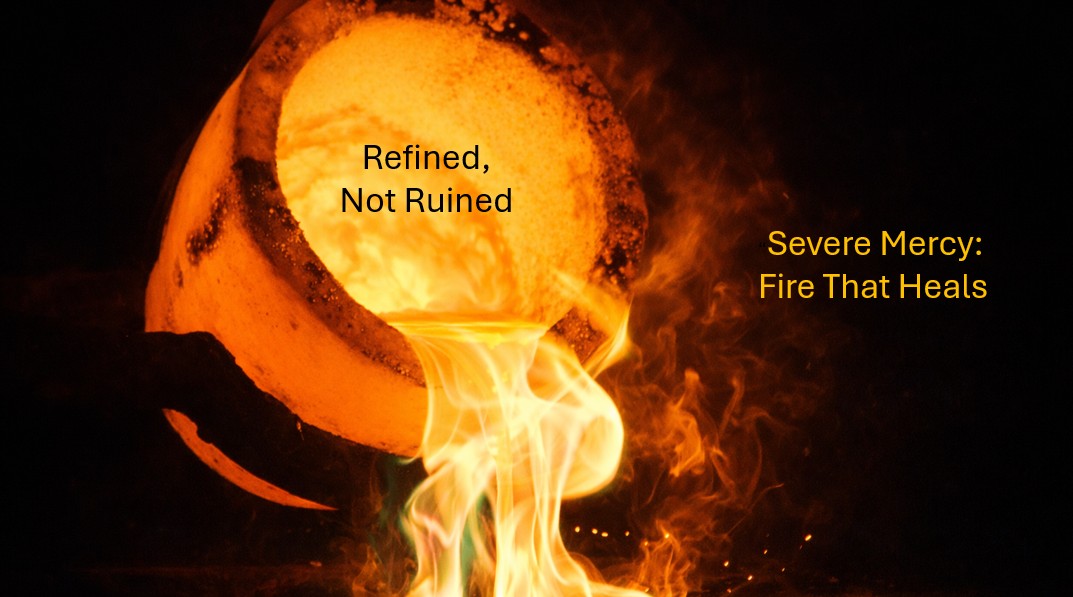
Many Christians were raised hearing that the wrath of God means endless punishment. The image often painted is one of divine anger that never ends and suffering that serves no purpose except retribution. But when we look carefully at Scripture, a different picture emerges. Throughout the Bible, God’s fire is often described not as destruction…
-
God’s Mercy and Judgment: How They Work Together

Discover how God’s mercy and judgment work together in the Bible through the prophets and Revelation, revealing His purpose to heal, restore, and redeem humanity. “For the LORD (YAHWEH) is our judge …; He will save us”Isaiah 33:22 One of the most common questions Christians ask is how a God of mercy can also be…
-
The Wrath of God
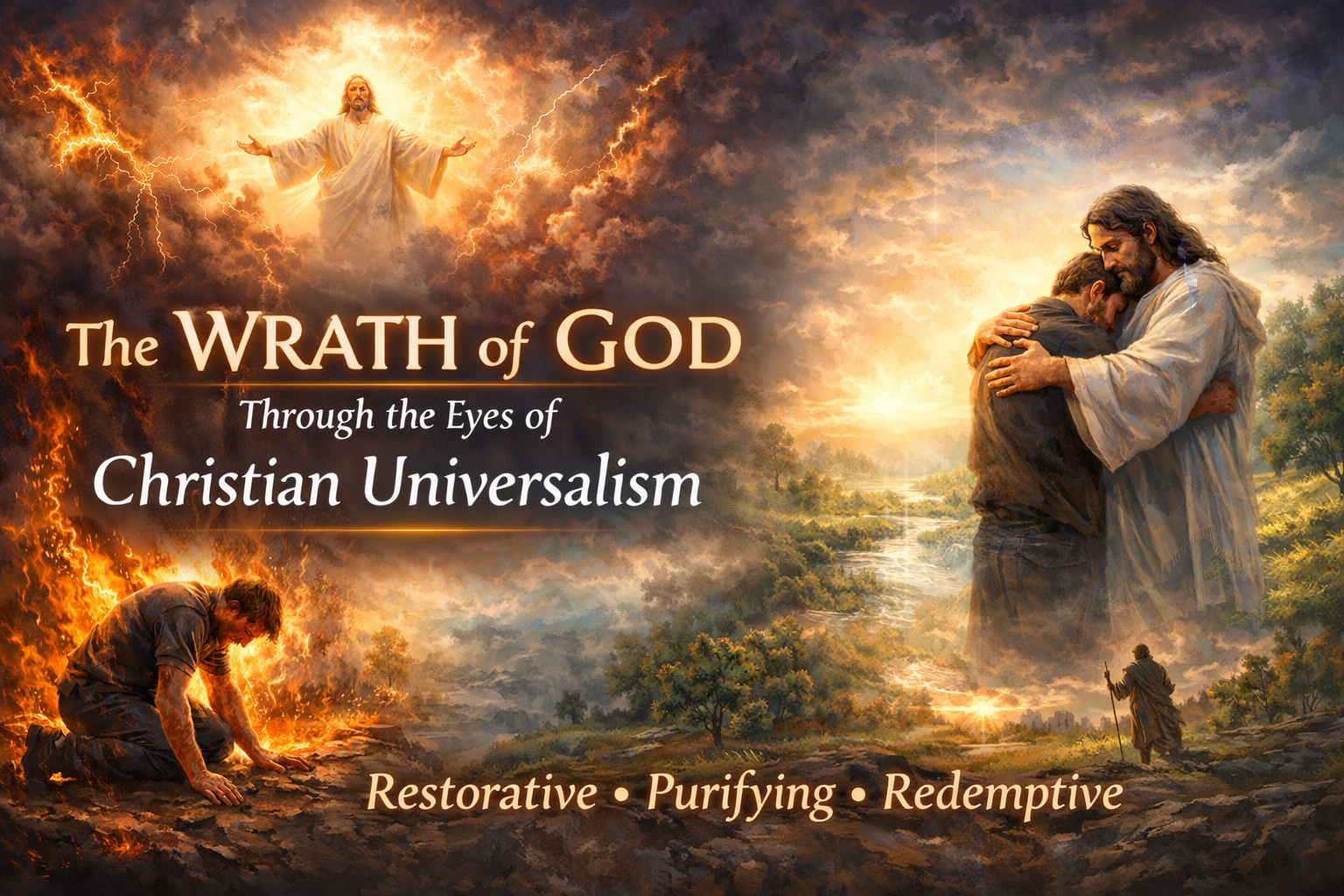
For many believers, the phrase “the wrath of God” evokes images of divine anger, judgment, and everlasting punishment. In much of popular theology, wrath is understood primarily as retributive—God inflicting eternal suffering upon sinners. And little wonder as a dictionary definition of our word wrath is “forceful, often vindictive anger, punishment or vengeance as a…
-
The Character of God in Revelation 20-22: A Linguistic and Theological Comparison

The final chapters of Revelation have long been central to debates about the ultimate destiny of humanity and the nature of God’s judgment. This article examines what Revelation 20-22 reveals about God’s character from two contrasting theological perspectives: Christian Universalism and Eternal Conscious Torment (ECT). Rather than focusing solely on the mechanics of judgment, we’ll…
-
Are eternal conscious torment (ECT) and penal substitutionary atonement (PSA) two of the major attacks on the character of a loving God, and if so, how?
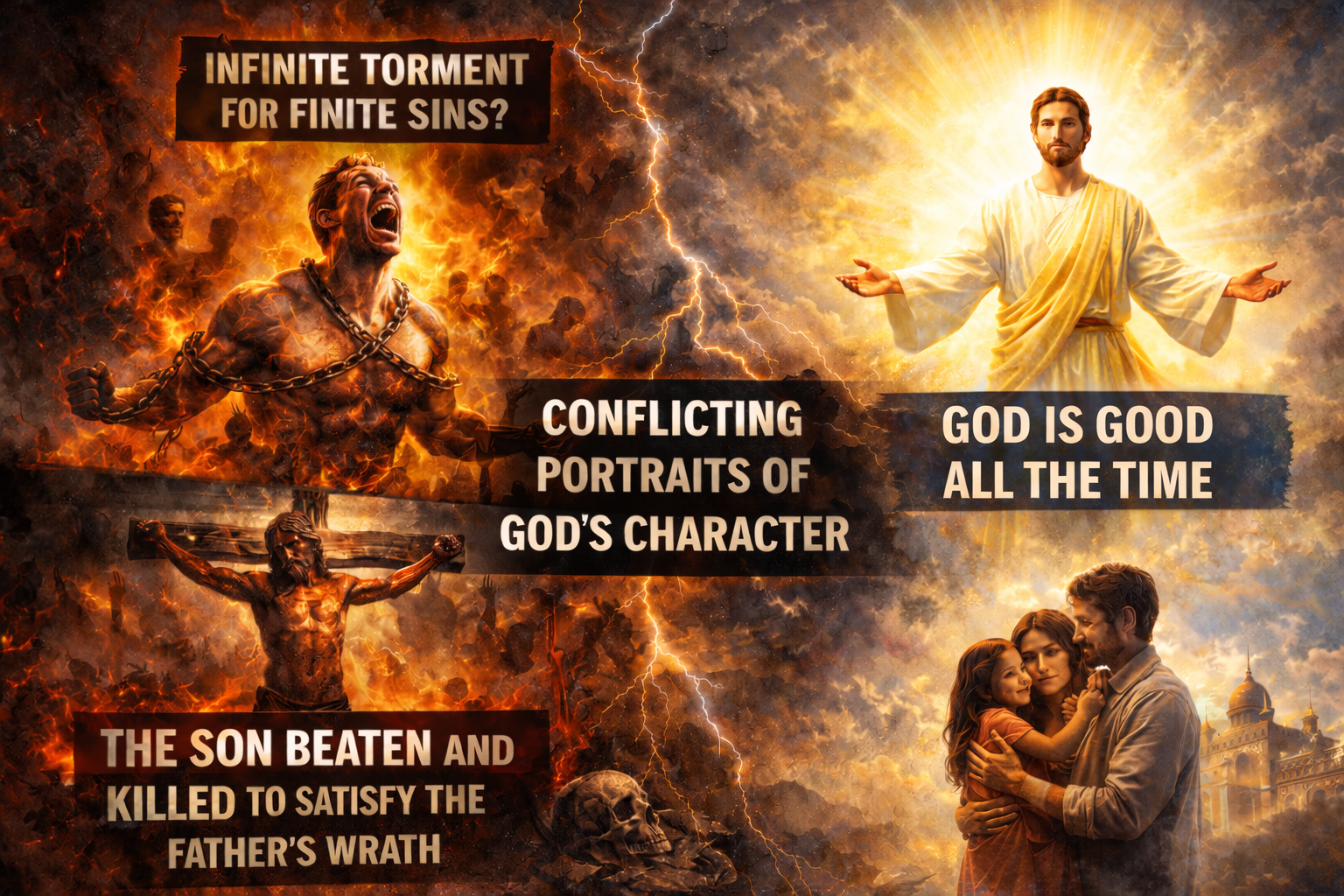
These doctrines are indeed among the most philosophically contested aspects of traditional Christian theology, particularly regarding God’s character. Eternal Conscious Torment (ECT)Critics argue ECT fundamentally conflicts with divine love and justice because: Proportionality problem: Infinite punishment for finite sins seems disproportionate. Even the worst human life is temporally limited, yet ECT proposes endless suffering without…