
Category: Greek Language & Linguistics,
-
Matthew 25:46 – Aionios and Kolasis: Judgment as Restoration

Few passages in the New Testament have exercised greater influence on Christian views of final judgment than Matthew 25:46: “And these will go away into eternal (aionios) punishment (kolasis), but the righteous into eternal (aionios) life (zoē).” This verse is frequently treated as decisive evidence for eternal conscious torment. Such interpretations, however, rest upon linguistic…
-
Exegesis and Eisegesis – Who Are These Characters?

Exegesis – drawing the meaning out of a text, especially Scripture, by paying attention to its context, grammar, and original intent. Eisegesis means reading your own ideas or assumptions into a text instead of letting the text speak for itself. In plain language Exegesis tries to understand the passage as its original audience would have understood it, while eisegesis…
-
The Aramaic Background of Matthew 25:46: Correction, Not Retribution
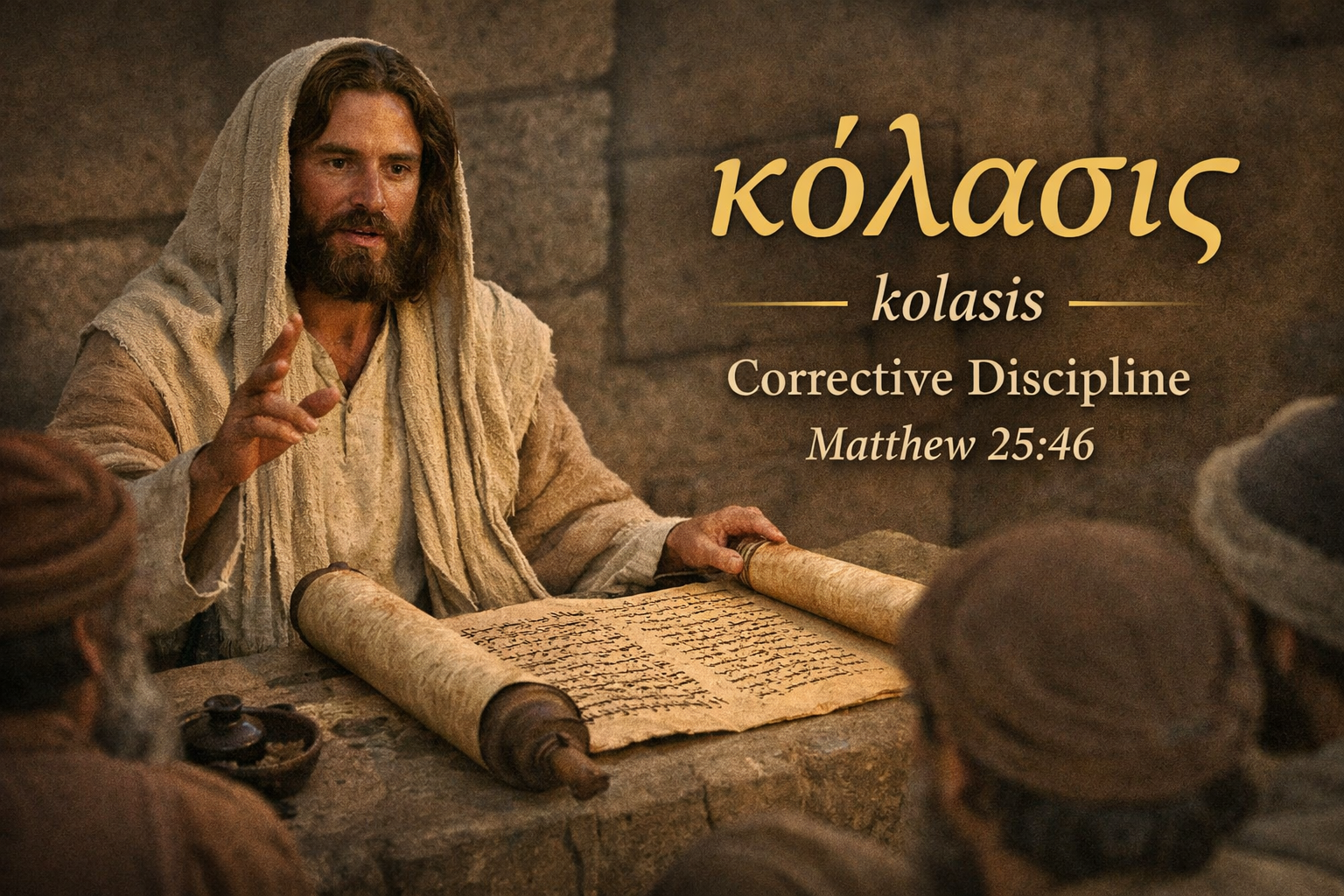
One of the most debated passages in the New Testament concerning judgment is Matthew 25:46. In many English translations it reads: “And these will go away into eternal punishment, but the righteous into eternal life.” For centuries this verse has been cited as proof of endless punishment. Yet when we examine the language behind the…
-
Isaiah 11:6 – Introduction

Isaiah’s vision of peace illustrates a world transformed by God’s kingdom, where natural enemies coexist harmoniously, led by a gentle child. This imagery reflects God’s intention to heal creation and restore relationships, emphasizing that peace comes through humility rather than force. In today’s context of division and violence, Isaiah’s message reassures us that fear and…
-
The Character of God in Revelation 20-22: A Linguistic and Theological Comparison

The final chapters of Revelation have long been central to debates about the ultimate destiny of humanity and the nature of God’s judgment. This article examines what Revelation 20-22 reveals about God’s character from two contrasting theological perspectives: Christian Universalism and Eternal Conscious Torment (ECT). Rather than focusing solely on the mechanics of judgment, we’ll…