
Many Christians were raised hearing that the wrath of God means endless punishment. The image often painted is one of divine anger that never ends and suffering that serves no purpose except retribution.
But when we look carefully at Scripture, a different picture emerges.
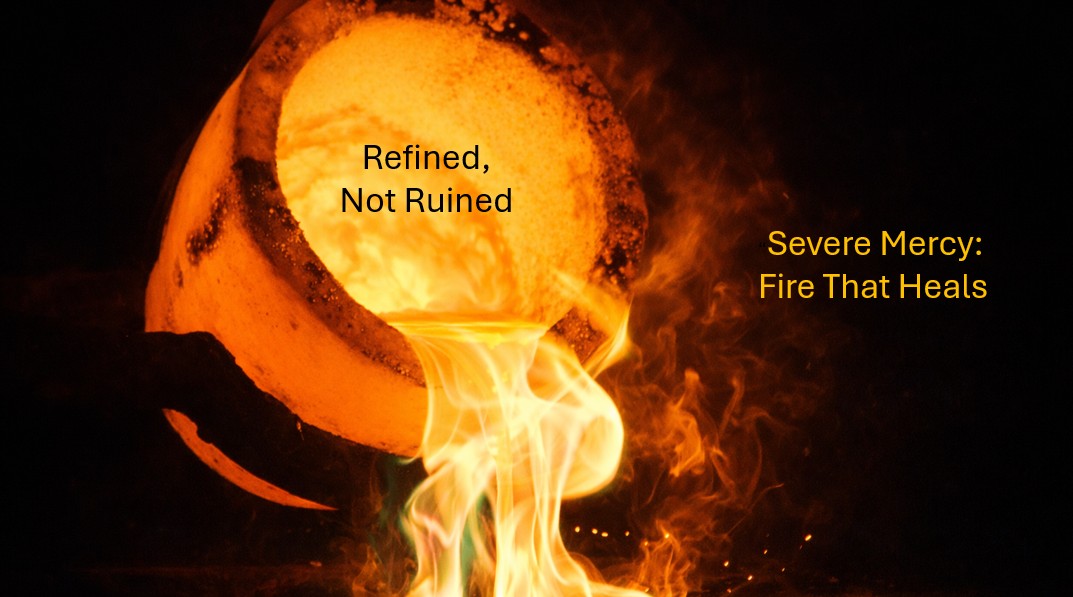
Throughout the Bible, God’s fire is often described not as destruction for its own sake, but as refinement. Gold is purified in a furnace. Silver is cleansed in fire. Farmers burn fields to remove weeds so new life can grow. Even doctors sometimes use painful procedures to remove disease so healing can begin.
In other words, sometimes mercy can be severe.
The phrase “severe mercy” describes the idea that God’s love is so committed to restoring His creation that He will not leave us trapped in sin, deception, or brokenness. His correction may feel painful for a time, but its purpose is always healing, never endless torment.
The prophet Malachi described God as a refiner’s fire, purifying His people like precious metal (Malachi 3:2-3). The writer of Hebrews said that God disciplines those He loves so that they may share in His holiness (Hebrews 12:6–11). Paul taught that God’s judgments ultimately aim at restoration, 1 Corinthians 11:32 and 1 Corinthians 5:5, with the broader theological pattern strongly developed in Romans 11:20–32.
The fire of God is not the rage of a tyrant
It is the cleansing fire of a loving Father.
The song “Severe Mercy” tells that story in plain, down-to-earth language. It reflects the journey many believers have taken—from fearing God’s wrath to discovering that His justice is actually an expression of His relentless love.
What once looked like anger becomes something very different when seen through the cross of Christ.
It becomes mercy strong enough to heal the world.
Enjoy this “down-to-earth” song about Father Yahweh’s “severe mercy.”
Leave a Reply