
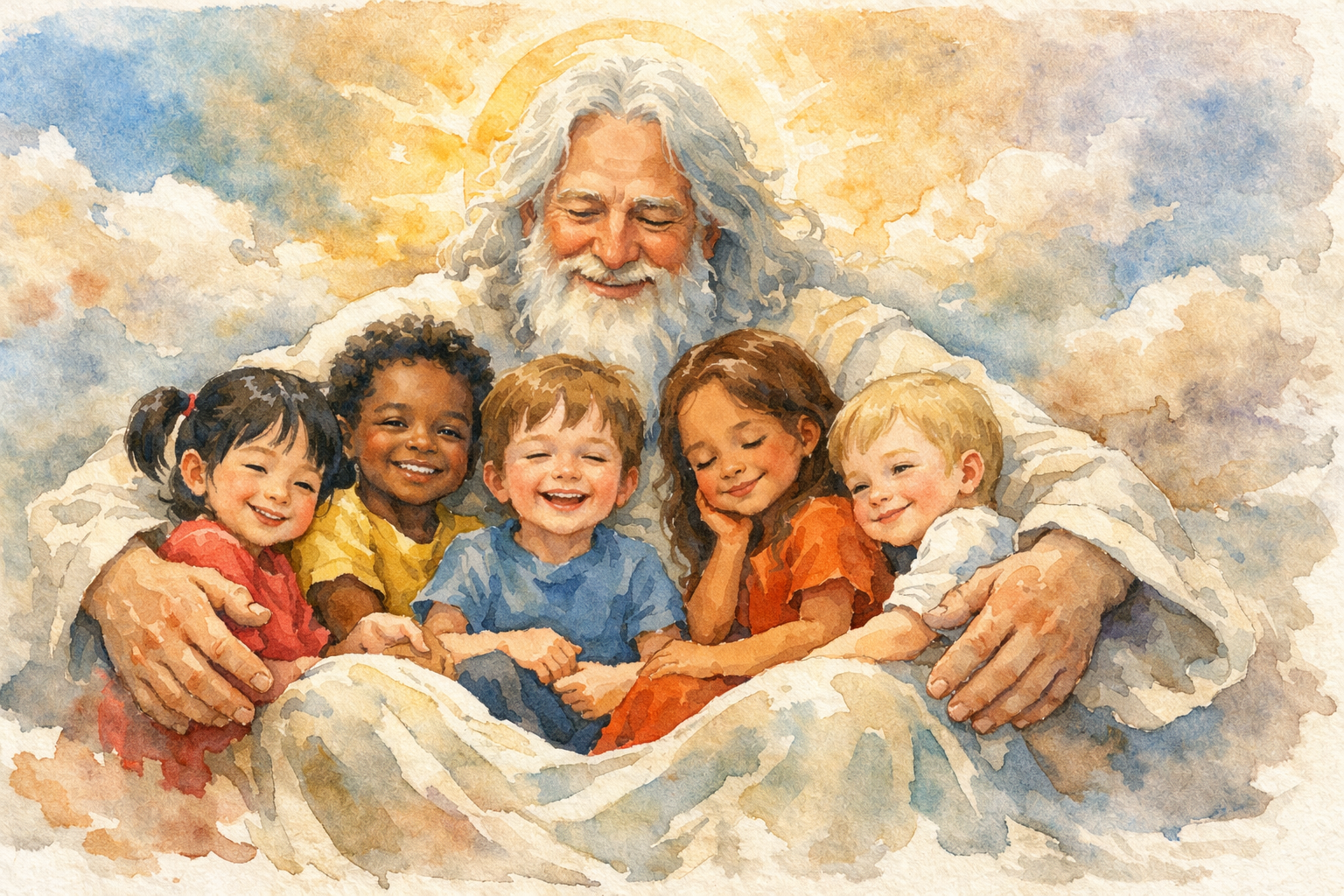
The Apostle Paul’s use of “adoption” language has often been interpreted as implying that human beings become God’s children only after conversion. Yet a careful reading of Paul’s letters reveals a different picture. For Paul, adoption does not create sonship out of nothing; rather, it restores, formalizes, and glorifies a relationship that already exists by virtue of creation. Humanity is portrayed throughout Scripture as originating from God, belonging to Him, and bearing His image. Paul’s doctrine of adoption presupposes this creational foundation and builds upon it.
In the Greco-Roman world, adoption primarily referred to the legal recognition and public installation of an heir, not the biological creation of a child. Paul draws upon this cultural framework when he speaks of believers receiving “adoption as sons” (Romans 8:15; Galatians 4:5). Adoption confers inheritance, authority, and mature status. It does not deny prior existence or origin. When Paul describes believers as heirs who were once enslaved, he assumes they already belonged to the household but had not yet entered into their full privileges.
This framework becomes especially clear in Galatians 4, where Paul compares humanity under the Law to a minor heir under guardianship. The heir is already a son, yet lacks freedom and authority. Redemption in Christ brings liberation, and adoption marks the moment of recognized maturity. Paul’s language assumes continuity between creation, fall, and restoration. Humans are not outsiders being newly adopted into God’s family; they are estranged children being restored to their rightful place.
Paul’s sermon in Acts 17 reinforces this perspective. Speaking to pagan Athenians, he declares that all people are God’s “offspring.” This affirmation is not limited to believers but applies to humanity as such. Paul never retracts this claim in his epistles. Instead, he explains how sin produces alienation and bondage, while Christ restores freedom and inheritance. Adoption, therefore, addresses relational and vocational loss, not ontological (the essence or the nature of being) nonexistence.
Romans 8 further develops this idea by linking adoption with bodily resurrection and cosmic renewal. Paul describes believers as waiting for “the adoption, the redemption of our bodies.” Adoption is not merely a present status but an eschatological reality in which God’s original purpose for humanity is fulfilled. Creation itself awaits this revelation, indicating that adoption completes what creation began.
In Paul’s theology, then, adoption presupposes creational sonship. Humanity belongs to God by origin, is alienated through sin, redeemed through Christ, and publicly installed as heirs through adoption. This pattern supports a restorative understanding of salvation, in which God brings His children to maturity rather than replacing them with an entirely new class of beings.
Leave a Reply