
Luke 16:31 “But he said to him, ‘If they do not listen to Moses and the Prophets, they will not be persuaded even if someone rises from the dead.’”
When Yeshua (Jesus) spoke as recorded in Luke 16:31 He was teaching that the writings of Moses contain prophetic patterns and shadows that ultimately point to the Messiah, or Christ as per the Greek. This is certainly true in Numbers 16–18. At first glance these chapters appear to focus on rebellion, judgment, priesthood, and temple administration. Yet beneath the surface (Proverbs 25:2) we find remarkable portraits of Yeshua as the true High Priest, the Mediator between life and death, the divinely chosen Shepherd, the resurrected Branch, and the One through whom God reconciles His people.
Challenge from the Rebellious
The central event of Numbers 16 is the rebellion of Korah, Dathan, and Abiram against Moses and Aaron. They reject Yahweh’s appointed mediators and seek priestly authority for themselves. The rebellion ultimately becomes a contest over who truly represents Yahweh. Christians have long seen in this a foreshadowing of Messiah because Yeshua Himself would later be rejected by many who refused His divine authority. Just as Korah challenged Yah’s chosen mediator, so many in Messiah’s day challenged the authority of the One whom the Father had sent. The chapter reminds us that Yahweh Himself establishes the means by which humanity approaches Him, and Christians see Yeshua as the ultimate fulfillment of that divinely appointed mediation.
Between the Dead and the Living
One of the clearest pictures of Messiah appears in Numbers 16:46–48. After judgment breaks out among the people, Aaron takes a censer filled with incense and runs into the midst of the congregation. The text says that he stood “between the dead and the living,” and the plague was stopped. This is one of the most powerful priestly images in the Torah. Aaron literally places himself between judgment and the people. Messiah followers have often seen this as a striking type of Messiah. Yeshua stands between a fallen humanity and the consequences of sin. Through His mediation, judgment is halted and reconciliation becomes possible. Aaron’s act is temporary and symbolic; Messiah’s priesthood is permanent and effective.
Universalists often find significance here because Aaron does not stand merely with the righteous. He intercedes for the very people who have been rebelling. The priest runs toward those under judgment rather than away from them. This anticipates the New Testament portrait of Messiah, who dies for sinners while they are still enemies. The direction of Yah’s action is toward rescue and reconciliation.
Aaron’s Rod that Buds
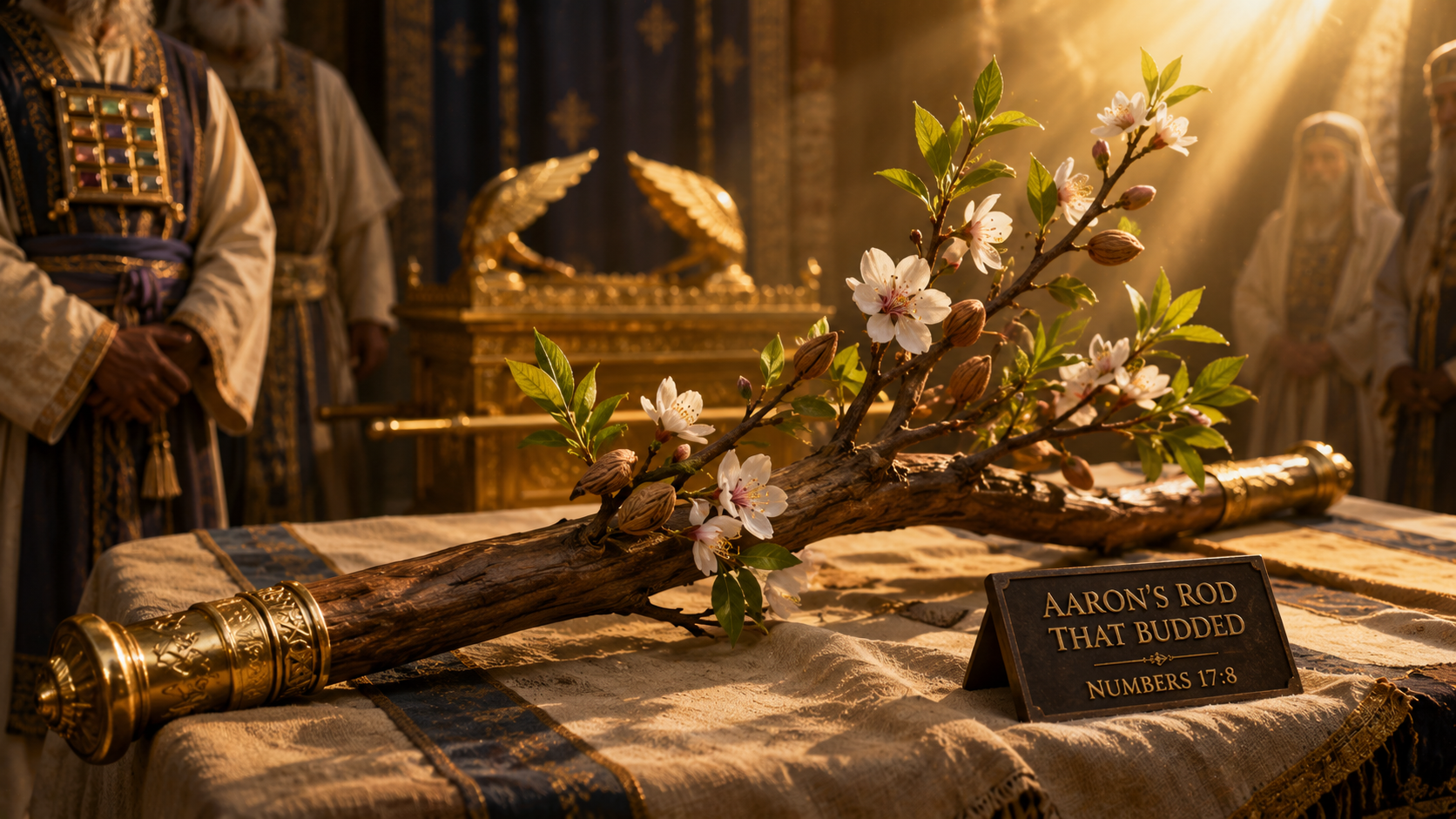
Numbers 17 contains the famous account of Aaron’s rod that buds. To settle the question of priestly authority once and for all, Yahweh commands that the leaders of the tribes place their staffs before Him. Overnight Aaron’s rod not only buds but blossoms and produces almonds. Christians have seen this miracle as a beautiful picture of resurrection. A dead piece of wood suddenly displays life. The rod points beyond Aaron to Messiah, who would emerge from death on a wooden cross into resurrection life. Just as Yahweh vindicated Aaron’s priesthood through miraculous life, He vindicated Messiah’s priesthood through resurrection from the dead.
The budding rod also connects with messianic imagery found elsewhere in Scripture. The Messiah is repeatedly called the Branch in passages such as Isaiah 11:1 and Zechariah 6:12. Aaron’s rod, lifeless yet suddenly fruitful, becomes a symbolic anticipation of the coming Branch who would bring life out of death.
Universalists often note another theme here. The purpose of the sign was not merely punishment but persuasion. God provides evidence so that rebellion may cease. The budding rod is a gracious act intended to convince, correct, and restore. Throughout Scripture, Yahweh repeatedly provides signs, witnesses, prophets, and ultimately His Son in order to bring people into truth. The emphasis is corrective rather than merely condemnatory.
Yeshua Foreshadowed in Aaron
Numbers 18 focuses on the priesthood and the responsibilities of Aaron and his sons. While much of the chapter concerns practical matters, Christians see Messiah throughout it because the entire priestly system foreshadows His ministry. Aaron bears responsibility for the sanctuary and serves as mediator between Yahweh and the people. The New Testament repeatedly identifies Yeshua as the fulfillment of everything the Aaronic priesthood anticipated. Aaron entered the earthly sanctuary; Yeshua enters the heavenly sanctuary. Aaron offered repeated sacrifices; Messiah offers Himself once for all. Aaron represented Israel before Yahweh; Messiah represents humanity before the Father.
A particularly beautiful statement occurs in Numbers 18:20 when Yahweh tells Aaron:
“I am your portion and your inheritance.”
For Believers, this ultimately points to Yeshua as the true inheritance of Yah’s people. The Levites received no territorial inheritance because Yahweh Himself was their inheritance. In the New Testament, Believers likewise find their ultimate treasure not in earthly possessions but in union with Messiah.
Universalist Themes
From a universalist perspective, several themes in Numbers 16–18 are noteworthy. First, even severe judgments occur within an ongoing covenant relationship. The purpose of the judgments is to expose rebellion and restore order, not to abandon Israel altogether. Yahweh continues dwelling among His people after these events. His covenant purposes remain intact.
Second, Aaron’s intercession reveals a God who provides mediation rather than simply destruction. When judgment breaks out, Yahweh provides a priest who stands between the living and the dead. Universalists often see this as consistent with the broader biblical picture of Messiah, who continually intercedes for humanity. The movement of redemption is toward reconciliation.
Third, the budding rod demonstrates Yahweh’s desire to convince rather than merely condemn. He provides a sign designed to end rebellion and establish peace. Universalists frequently observe that Yahweh’s dealings with humanity often involve revelation, persuasion, discipline, and correction aimed at restoration.
Finally, the chapter’s emphasis on priestly mediation anticipates Messiah’s universal role as mediator. Universalists often connect this with passages such as 1 Timothy 2:5–6, where Messiah is called the one mediator between God and humanity, and Colossians 1:20, which speaks of Messiah reconciling all things to God. While Numbers 16–18 does not explicitly teach universal salvation, its recurring themes of mediation, intercession, correction, and restoration harmonize well with the universalist understanding of Yahweh’s ultimate purpose.
Summary
Colossians 1:20 “and through Him to reconcile all things to Himself, having made peace through the blood of His cross; through Him, I say, whether things on earth or things in heaven.”
Viewed through the lens of Luke 16:31, Numbers 16–18 becomes rich with Christological significance. Yeshua is the greater Moses whose authority is challenged but ultimately vindicated. He is the greater Aaron who stands between the living and the dead. He is the true High Priest who intercedes for sinners. He is the budding Rod and living Branch who brings life out of death. He is the inheritance of His people and the mediator through whom reconciliation is accomplished. Even in these chapters of rebellion and judgment, the deeper story points toward Yeshua Messiah and toward Yahweh’s persistent work of restoring what has been lost.
Brother Roger
Enjoy this Torah portion song about this wonderful passage.
Leave a Reply