
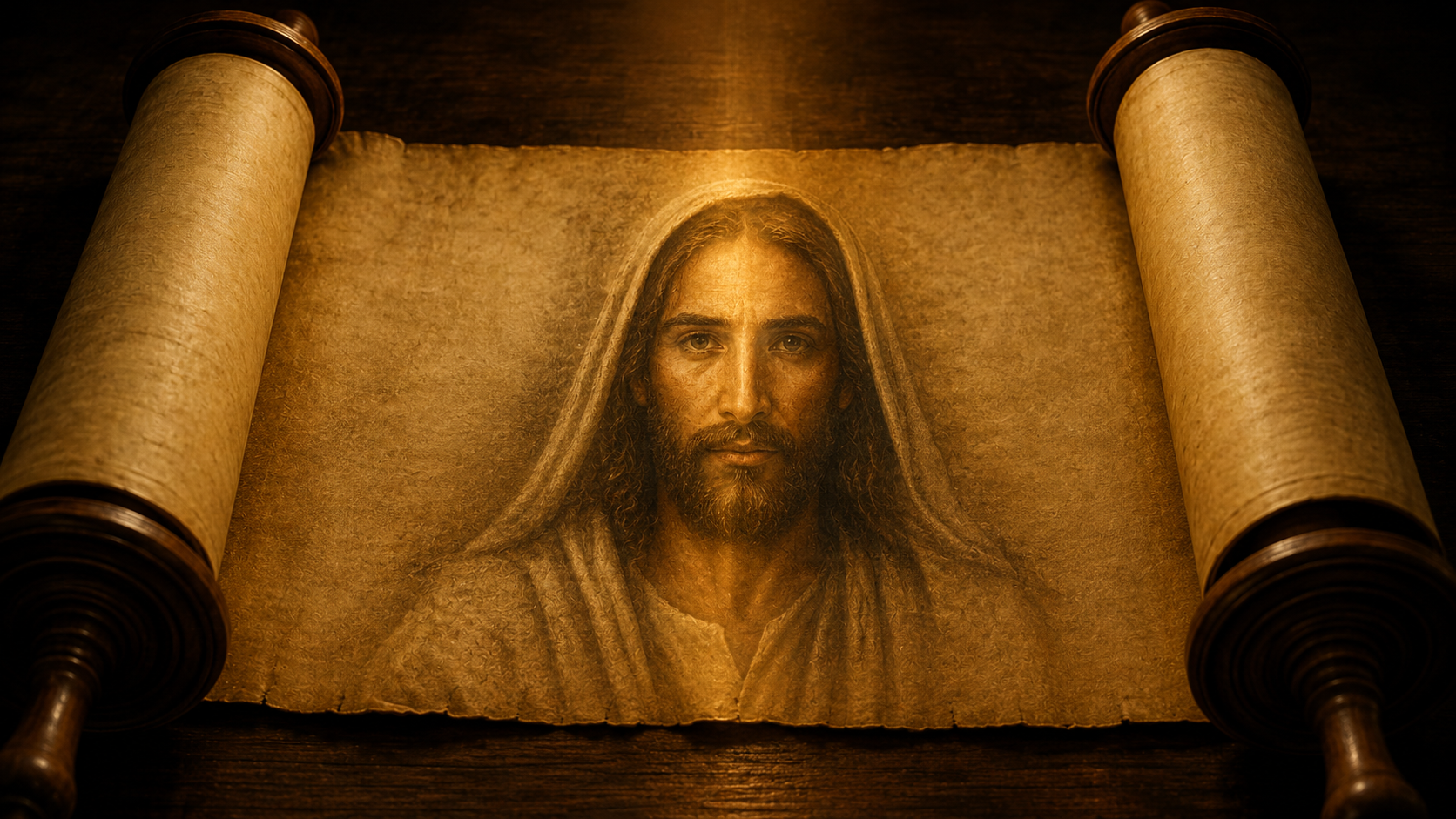
The Hidden Teacher Is Revealed and Universalist Themes in Light of Isaiah 30:20 and Acts 3:21
Isaiah gave Israel a remarkable promise:
“Although Yahweh has given you bread of privation and water of oppression, He, your Teacher will no longer hide Himself, but your eyes will behold your Teacher.” Isaiah 30:20
Believers have long understood this Teacher to be Yeshua Himself. During the days of Moses, the Teacher was present but hidden behind sacrifices, festivals, symbols, and covenant institutions. By the time of the New Testament, the hidden Teacher stood openly before Israel. This makes Deuteronomy 11:26–16:17 especially significant, for these chapters contain many of the clearest prophetic shadows of Yeshua found in the Torah. They present Him as the Blessing of Yahweh, the true Place of Worship, the compassionate Shepherd, the greater Passover Lamb, the Bread of Life, the Firstfruits, the joyful King, and the Lord of the Harvest. Read alongside Peter’s words in Acts 3:21 concerning “the restoration of all things,” these chapters also reveal themes that many believeng universalists understand as anticipating Yahweh’s ultimate restoration of His creation.
Yeshua the Choice Between Blessing and Curse (Deuteronomy 11:26–32)
Moses places before Israel a choice: blessing through obedience or curse through disobedience. Throughout Scripture this pattern ultimately points to Yeshua. Humanity repeatedly chooses the path of disobedience, yet Yeshua alone perfectly walks the path of blessing. More remarkably, the New Testament teaches that He willingly bears the curse on behalf of sinners so that the blessing promised to Abraham might come to the nations. Thus the choice presented by Moses ultimately finds its resolution in Messiah, who takes our curse and grants us His blessing.
Universalist Theme: Yahweh’s Ultimate Goal Is Blessing
Although blessing and curse are presented side by side, the larger movement of Scripture consistently points toward blessing as Yahweh’s final purpose. Judgment exposes and removes evil, but blessing reveals His ultimate intention. Universalists often observe that Peter’s proclamation in Acts 3:21 envisions history culminating not in endless curse but in the restoration of all things. The opening verses of this Torah portion therefore begin with a choice that ultimately anticipates Yahweh’s desire to bless His creation through Messiah.
Yeshua the True Place of Worship (Deuteronomy 12)
Chapter 12 repeatedly emphasizes that Yahweh Himself will choose the place where His name will dwell. Israel is forbidden to invent its own centers of worship. Christians recognize this as pointing beyond the Tabernacle and later the Temple to Yeshua Himself. He later declares that something greater than the Temple has arrived. In Him, Yahweh’s presence no longer resides merely within a building made with hands but dwells bodily in the Messiah. The hidden Teacher promised by Isaiah becomes the living Temple in whom humanity encounters Yahweh.
Universalist Theme: One Place for All Peoples
Although Deuteronomy addresses Israel specifically, the prophets later envision all nations streaming to Yahweh’s mountain to worship Him. 1 Timothy 4:10 Believers often see this progression as highly significant. The one place where Yahweh chooses to dwell ultimately becomes one Person through whom all nations may come to the Father. Yeshua becomes the universal meeting place between Yahweh and humanity.
Yeshua the True Prophet (Deuteronomy 13)
Chapter 13 warns Israel against false prophets who attempt to draw the people away from Yahweh. Every false voice ultimately prepares readers for the arrival of the one completely faithful Prophet. Yeshua fulfills this role perfectly. He never leads anyone away from Yahweh but reveals the Father completely. Every warning against deception increases anticipation for the true Teacher whom Isaiah foresaw and whom the disciples eventually recognized.
Universalist Theme: Truth Liberates Rather Than Condemns
Believers of 1 Timothy 4:10 frequently observe that Yahweh opposes falsehood because deception enslaves His people. Throughout Scripture truth serves liberation. Yeshua Himself later declares that the truth will set people free. Divine correction therefore exists not simply to expose error but to restore people into truth and life.
Yeshua the Compassionate Shepherd (Deuteronomy 14)
Much of chapter 14 concerns clean and unclean foods, and Yeshua is our ultimate clean food. He is not like a pig which, with divided hoofs, can only “rightly divide” the Word of Truth. He goes beyond that to “chewing the cud” as He ruminates on the Scriptures and blesses His disciples to do the same. Results? Our “rumination” yields rich nutrients within His hidden word, that is, within Yeshua Himself, the ultimate “hidden Word” or “hidden nutrient.” Chapter 14 also commands generous care for the Levite, the stranger, the orphan, and the widow. These repeated expressions of compassion reveal Yahweh’s own heart. Christians see this fulfilled beautifully in Yeshua, the Good Shepherd who continually seeks the marginalized, feeds the hungry, welcomes the outsider, and cares for those whom society neglects, Matthew 25. The hidden Teacher becomes visible through acts of mercy.
Universalist Theme: Yahweh’s Heart Includes the Stranger
There is repeated inclusion of the foreigner within Israel’s covenant life. Even under the Mosaic covenant, Yahweh continually demonstrates concern for those outside Israel by commanding His people to care for them. This anticipates the New Testament expansion of salvation to all nations through Messiah, Revelation 5:13, 21:24 and 22:2.
Yeshua the Great Deliverer (Deuteronomy 15)
Chapter 15 introduces the Sabbatical Year, when debts are released and Hebrew servants are set free. Christ followers have long recognized this as a powerful picture of Messiah’s work. Yeshua proclaims liberty to captives, forgives spiritual debts, and announces the acceptable year of Yahweh, Luke 4:16-22. What the sabbatical year symbolized economically, Messiah fulfills spiritually and eternally.
Universalist Theme: Release Rather Than Endless Bondage
One of the strongest Old Testament patterns for fulfillment of 1 Timothy 4:10 is here. Yahweh builds release into the very fabric of Israel’s society. Debts are not endless. Bondage is not perpetual. Restoration is intentionally scheduled into covenant life. Many believers see this as reflecting Yahweh’s own character and His larger redemptive purposes of mankind throughout history, Genesis 12:3, Revelation 5:13 and Philippians 2:8-11.
Yeshua the Firstborn Given to Yahweh (Deuteronomy 15:19–23)
The firstborn males of the flock belonged uniquely to Yahweh. Christians recognize this as foreshadowing Yeshua, the Firstborn over all creation and the One wholly consecrated to the Father’s service. What the firstborn animals symbolized, Messiah fulfills completely through His perfect obedience and sacrificial life.
“He is the image of the invisible God, the firstborn of all creation” Colossians 1:15. “He is also head of the body, the church; and He is the beginning, the firstborn from the dead, so that He Himself will come to have first place in everything” Colossians 1:18. “And when He again brings the firstborn into the world, He says, “and let all the angels of God worship Him” Hebrews 1:6.
Yeshua Our Passover Lamb (Deuteronomy 16:1–8)
Perhaps nowhere in this Torah portion is Yeshua more clearly revealed than in the Passover celebration. Israel was commanded each year to remember the night Yahweh delivered them from Egypt through the blood of the lamb. The New Testament explicitly identifies Yeshua as our Passover Lamb. 1 Corinthians 5:7 “Clean out the old leaven so that you may be a new lump, just as you are in fact unleavened. For Christ our Passover also has been sacrificed.”
His sacrifice accomplishes the greater Exodus, delivering humanity from sin and death rather than merely from Egyptian slavery. Isaiah’s hidden Teacher becomes fully visible at Calvary.
Universalist Theme: Passover Was Always About Deliverance
The purpose of Passover was never simply punishment for Egypt; it was the deliverance of Yahweh’s people. We frequently observe that throughout Scripture Yahweh’s saving acts consistently move toward liberation. The Exodus itself becomes the foundational pattern for later redemption through Messiah and ultimately for the restoration of creation.
Yeshua the Bread Without Leaven (Deuteronomy 16:3–4)
The Feast of Unleavened Bread called Israel to remove leaven from their homes and remember the haste of their deliverance. Leaven later becomes a common biblical symbol for sin and corruption. Yeshua fulfills this feast perfectly because He alone lived without the leaven of sin. Through Him His people are cleansed and called into newness of life, Romans 6:4.
Universalist Theme: Yahweh Removes Corruption to Preserve Life
The removal of leaven illustrates Yahweh’s purpose in judgment. Evil is removed so that life may flourish. Divine judgment therefore serves purification rather than endless destruction. This harmonizes naturally with Acts 3:21, where restoration requires the removal of everything that corrupts creation.
Yeshua the Firstfruits (Deuteronomy 16:9–12)
The Feast of Weeks celebrated the firstfruits of the harvest. Christians immediately recognize Yeshua as the Firstfruits of the resurrection. His rising from the dead guarantees the coming harvest. Just as the first sheaf promised the full harvest yet to come, Messiah’s resurrection guarantees the ultimate completion of Yahweh’s redemptive and restorative work.
Universalist Theme: The Firstfruits Promise the Full Harvest
There is profound significance in the biblical image of firstfruits. A firstfruit is never the entire harvest; it is the beginning that guarantees what follows. Paul later applies this imagery directly to Messiah’s resurrection. We therefore see the resurrection of Yeshua as the first stage of the larger restoration anticipated by Acts 3:21.
1 Corinthians 15:20 “But now Christ has been raised from the dead, the first fruits of those who are asleep.” And, in verse 23 “But each in his own order: Christ the first fruits, after that those who are Christ’s at His coming,…”
Yeshua the Joy of the Feast of Booths (Deuteronomy 16:13–17)
The Feast of Booths celebrated Yahweh’s faithful provision during Israel’s wilderness journey and concluded with rejoicing before Him. Christians understand this feast as pointing toward the ultimate dwelling of Yahweh with humanity through Messiah, Revelation 21:3. The Feast of Booths anticipates the day when the hidden Teacher will dwell openly among His people forever, fulfilling the promise later celebrated in Revelation: “Behold, the dwelling place of Elohim is with humanity.”
Universalist Theme: Universal Joy Before Yahweh
Three times each year every Israelite male was commanded to appear before Yahweh in joyful worship. The feasts repeatedly emphasize rejoicing rather than fear. These celebrations as prophetic pictures of the universal worship anticipated throughout the prophets, when all nations come to rejoice before Yahweh through His Messiah, Revelation 5:13.
Conclusion: The Hidden Teacher Is Revealed in Yeshua
Isaiah promised that one day the hidden Teacher would no longer remain concealed. Deuteronomy 11:26–16:17 reveals that hidden Teacher through blessings and curses, the chosen place of worship, warnings against false prophets, compassion for the needy, release from debt, the Passover Lamb, unleavened bread, firstfruits, and joyful festivals. Every one of these institutions quietly points toward Yeshua. Alongside these Messianic portraits runs another theme that many Christian universalists find deeply significant. Yahweh’s judgments serve blessing. His discipline leads to release. His compassion embraces the stranger. His feasts celebrate deliverance, harvest, and joy. His firstfruits guarantee the full harvest. His dwelling ultimately embraces all of humanity. For this reason, many universalists see this Torah portion harmonizing beautifully with Acts 3:21, where Peter proclaims that Yeshua remains in heaven until the appointed time for the restoration of all things—the glorious fulfillment of the hope that Moses, Isaiah, and all the prophets faithfully anticipated.
Brother Roger
How do you like this song summarizing these wonderful precepts?
Leave a Reply