
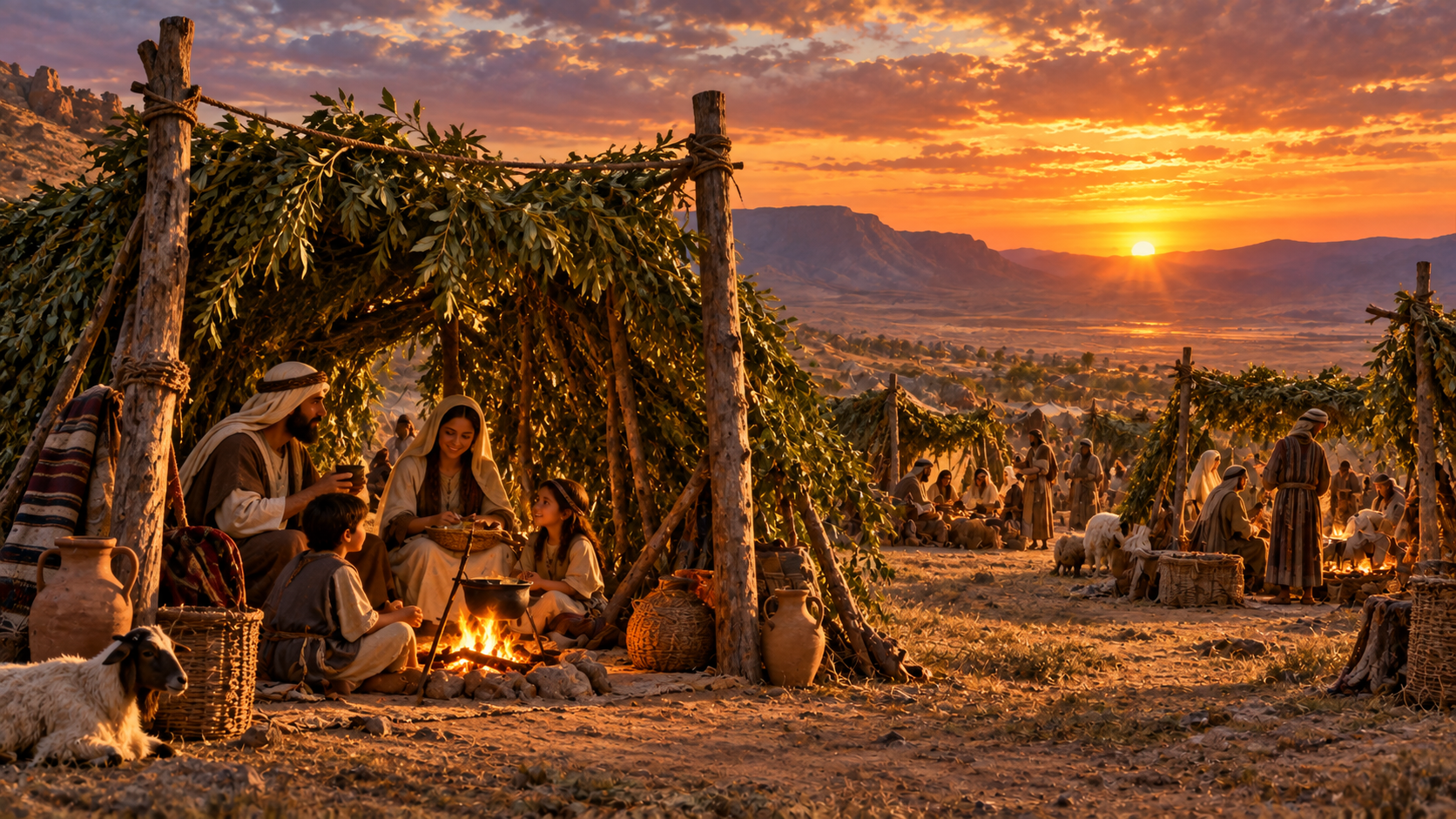
Torah: Leviticus 22:26-23:44; Prophets: I Kings 8:2-21; Gospel: John 7:1-10
“Speak to the sons of Israel, saying, ‘On the fifteenth of this seventh month is the Feast of Booths for seven days to Yahweh. ‘On the first day is a holy convocation; you shall do no laborious work of any kind.
For seven days you shall present an offering by fire to Yahweh. On the eighth day you shall have a holy convocation and present an offering by fire to Yahweh; it is an assembly. You shall do no laborious work.
These are the appointed times of Yahweh which you shall proclaim as holy convocations, …” Leviticus 23:34-37A
Sukkot, the Feast of Tabernacles or Booths is one of the most joyful appointed times in Scripture. But beneath the harvest celebration is a deep story about Yahweh dwelling with His people. Leviticus 23 lays out the appointed times, and Hebrews 3:5 reminds us that Moses was faithful as a servant to testify to things that would be spoken later. That’s a key. Moses was not only recording ancient ceremonies. He was bearing witness to a greater reality still coming into view. Yahweh told Israel to live in booths so future generations would remember that their ancestors were once homeless wanderers. They had been slaves. They owned no land, crossed a barren wilderness, and survived only because Yahweh was with them.
So every year, as they sat in fragile shelters, sometime after gathering in the harvest, they were acting out a story. Scattering moving toward gathering. Dependence moving toward home. Then Zechariah 14 widens the lens. He speaks of severe judgment. Jerusalem in distress and Yahweh confronting the nations, but the prophecy doesn’t end there. After judgment, the nations come to worship. Wow! Enemies become worshipers, and the Feast of Booths, once Israel’s story alone, becomes global.
That pattern matters. Judgment is real, but it isn’t the final word. That trajectory lines up with Acts 3:21, which points to the restoration of all things, spoken by the prophets from of old. Zechariah sees judgment, yes, but he also sees the nations gathered. He sees worship. Holiness spreading until even ordinary cooking pots are holy to Yahweh. John records how Yeshua showed up at the Feast of Booths, also known as the Feast of Tabernacles, to shed more light on what Sukkot is all about. Then Luke quietly brings us to Bethlehem. Caesar issues a decree , but behind Caesar’s appearance of control, Yahweh’s greater purpose is moving forward as Mary carries Yeshua into the world. So where is Yeshua in Sukkot? Not by forcing him into every detail, but by recognizing that the booths, the wilderness, the gathering, and the prophetic hope all move in one direction. From temporary shelter toward lasting dwelling. From scattering toward gathering. From wandering toward home. And ultimately, from a fractured creation toward what Peter calls the restoration of all things.
Brother Roger
Leave a Reply