
Torah Deuteronomy 33:1-34:12, Prophets Joshua 1:1-18, and Gospel Acts 1:1-14
Yeshua in the Final Torah Portion: From Moses to Joshua to the Restoration of All Things
The Story Does Not End With Moses
Deuteronomy 33:1–34:12 brings us to one of the most moving moments in all the Torah. Moses, the servant of Yahweh, has reached the end of his earthly journey. He blesses Israel tribe by tribe, climbs Mount Nebo, looks across the Jordan into the land of promise, and dies without personally leading Israel into it. Then Joshua takes his place. Joshua 1 begins precisely where Deuteronomy ends: “Moses My servant is dead; now therefore arise, cross this Jordan.” Centuries later, Acts 1 presents another departure and another commissioning. Yeshua ascends, His disciples remain behind, and they are told that the work is not finished. Read together with Hebrews 4:2 and Acts 3:21, these passages tell a remarkably unified story: Yahweh makes promises, calls His people to believe His good news, raises up the One who leads them into His rest, and moves His creation toward the restoration of all things.
Moses Dies With a Blessing on His Lips
Moses does not end his ministry by cursing Israel. Deuteronomy 33 begins, “Now this is the blessing with which Moses the man of God blessed the sons of Israel before his death.” That is remarkable when we remember everything Moses had endured with them. They had complained, rebelled, worshiped the golden calf, refused to enter the land, and repeatedly tested Yahweh in the wilderness. Yet Moses’ final recorded words over the tribes are words of blessing. Their failures were real, and judgment had been real, but failure had not canceled Yahweh’s covenant purpose.
Yahweh Came From Sinai to Bless His People
Moses begins his blessing by looking backward to Sinai: “Yahweh came from Sinai.” The mountain had thundered. The people had trembled. The Law had been given. Yet Moses does not describe Sinai merely as a scene of terror. He says of Yahweh, “Indeed, He loves the people” (Deuteronomy 33:3). Judgment, holiness, commandment, and love are not enemies in the biblical story. The One who commands Israel is also the One who loves them, carries them, disciplines them, and continues moving them toward His promised purpose.
Moses Was a Servant and a Witness
Hebrews gives us an important way of understanding Moses: “Moses was faithful in all His house as a servant, for a testimony of those things which were to be spoken later” (Hebrews 3:5). Moses therefore points beyond himself. His ministry is not the destination. It is testimony. His life, the Exodus, the wilderness, the Law, the tabernacle, the sacrifices, and Israel’s journey all become part of a larger witness that reaches its fulfillment in Yeshua.
The Good News Was Preached to Israel Too
Hebrews 4:2 makes a statement we can easily overlook: “For indeed we have had good news preached to us, just as they also.” The Exodus generation heard good news. Yahweh had delivered them from slavery. He had defeated Pharaoh, brought them through the sea, fed them in the wilderness, and promised them a land of rest. Their problem was not that Yahweh had failed to give them good news. Their problem was that “the word they heard did not profit them, because it was not united by faith in those who heard.”
That changes the way we can read Israel’s wilderness story. The wilderness was not merely a story about rules and punishments. It was a story about a people who had been rescued and were being invited to trust their Rescuer. They had already seen His mighty acts, but they struggled to believe that the One who brought them out could also bring them in.
Unbelief Delayed the Promise but Did Not Destroy Yahweh’s Purpose
An entire generation died in the wilderness because of unbelief, yet here is the important point: the promise did not die with them. Their children still stood on the banks of the Jordan. Joshua was still appointed. The land was still ahead. Yahweh’s faithfulness proved greater than that generation’s faithlessness. Human unbelief had terrible consequences, but it did not cause Yahweh to abandon what He had promised.
This gives us an important window into biblical judgment. Judgment can be severe without meaning that Yahweh’s ultimate purpose has failed. The wilderness generation lost an extraordinary privilege, but Yahweh’s covenant story continued.
Moses Can See the Land but Cannot Bring Israel Into It
Deuteronomy 34 contains a poignant scene. Yahweh takes Moses to Mount Nebo and shows him the land stretching before him. Moses sees it, but he does not cross the Jordan. After forty years of leading Israel, he dies on the wilderness side of the river.
There is something profoundly symbolic here when read in light of the New Testament. Moses can lead Israel to the boundary, but another must take them across. The Torah itself ends with expectation. Israel has received the Law, but they still need someone to lead them into the promised inheritance.
Joshua Must Now Lead Them Across
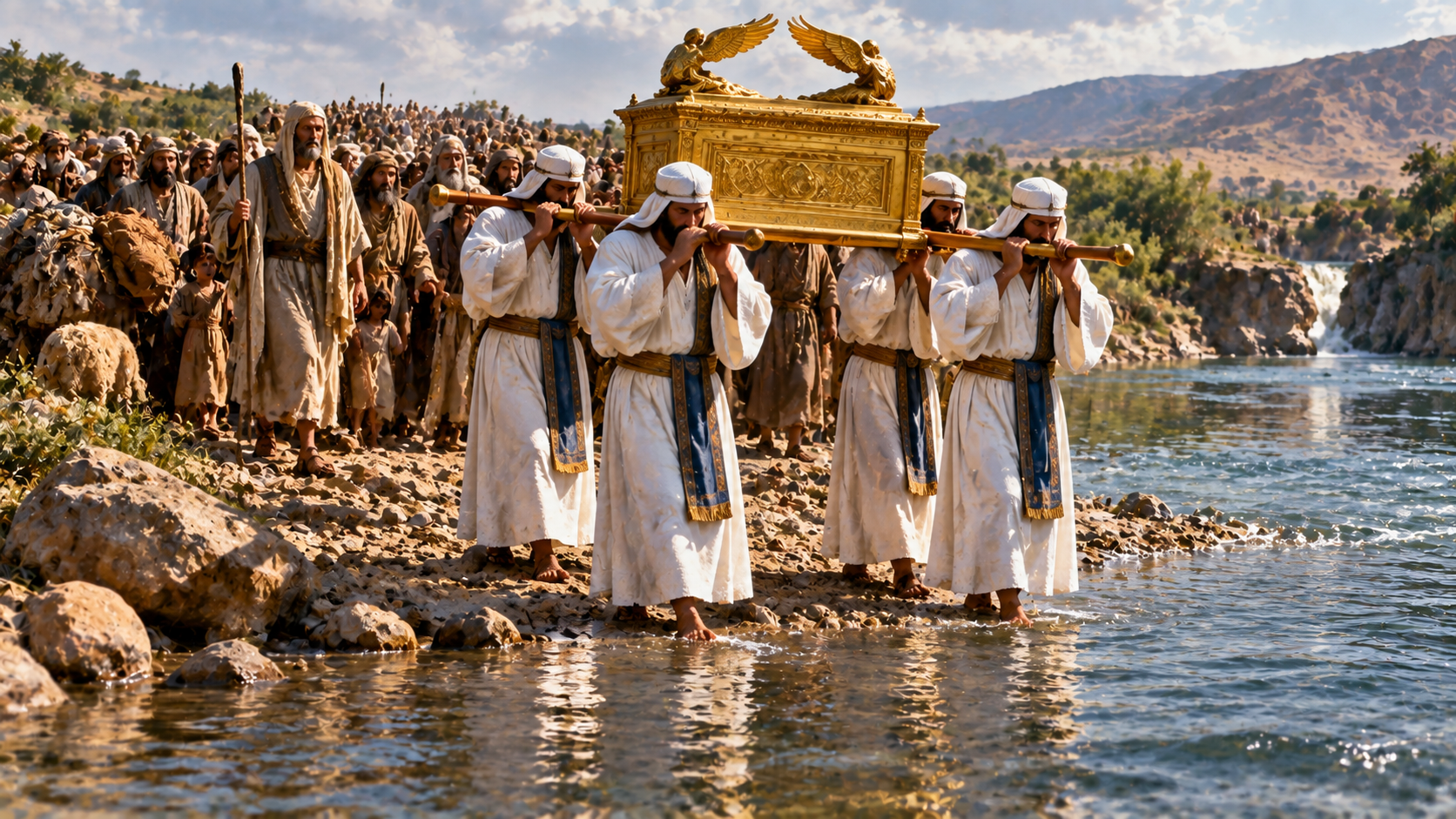
Joshua 1 opens with Yahweh saying, “Moses My servant is dead; now therefore arise, cross this Jordan.” Joshua receives the commission Moses can no longer carry out. He is told repeatedly, “Be strong and courageous.” Yahweh promises, “Just as I have been with Moses, I will be with you; I will not fail you or forsake you.”
Even Joshua’s name points us forward. The Hebrew name Yehoshua, shortened to Yeshua, carries the idea that Yahweh saves. Joshua is not Yeshua of Nazareth, of course, but the correspondence becomes difficult for Christ following readers to miss. Moses brings Israel to the border; Joshua leads them into the land. The Law bears witness, but Yeshua brings God’s saving purpose to fulfillment.
Joshua’s Rest Was Real, but It Was Not the Final Rest
Israel really did enter Canaan under Joshua. Yet Hebrews 4 tells us that this could not have been Yahweh’s final meaning of “rest.” Hebrews 4:8 says that if Joshua had given them the ultimate rest, Yahweh would not afterward have spoken of another day. Therefore, “there remains a Sabbath rest for the people of God” (Hebrews 4:9).
That means Canaan itself was pointing beyond Canaan. The land was real, but it was also a signpost. Joshua’s leadership was real, but it pointed beyond Joshua. The rest was real, but a greater rest remained.
Then We Come to Another Mountaintop
Acts 1 brings us to another transition. Yeshua has been raised from the dead. For forty days He appears to His disciples and speaks to them “of the things concerning the kingdom of God.” Then He is taken up from them.
There is an intriguing parallel. Deuteronomy ends with Moses on a mountain and Joshua commissioned to continue the work. Acts begins with Yeshua ascending and His disciples commissioned to continue bearing witness. Yet there is an enormous difference: Moses dies and remains dead. Yeshua dies, rises, and ascends alive.
The disciples are not carrying forward the memory of a dead teacher. They are witnesses of the risen Messiah.
“You Shall Be My Witnesses”
Before ascending, Yeshua tells them, “You will receive power when the Holy Spirit has come upon you; and you shall be My witnesses both in Jerusalem, and in all Judea and Samaria, and as far as the remotest part of the earth” (Acts 1:8).
Notice the widening movement. Israel had once crossed the Jordan to enter one particular land. Now the witnesses of Yeshua are sent outward—to Jerusalem, Judea, Samaria, and finally the ends of the earth. The movement of Yahweh’s saving purpose is no longer simply into Canaan. It is outward to the world.
Why Are You Looking Into the Sky?
After Yeshua ascends, the disciples stand gazing upward. Two men in white clothing ask, “Men of Galilee, why do you stand looking into the sky?” Yeshua will return, they are told. In other words, the Ascension is not the end of the story.
This is important. Acts does not begin with Yeshua abandoning the earth. It begins with the risen King commissioning witnesses for the earth and with a promise that He will return. The disciples then go back to Jerusalem, where they pray and wait together for what Yahweh will do next.
Acts 1 Leads Us Naturally Toward Acts 3
Only two chapters later, Peter announces something that helps us understand the direction of the whole story. He speaks of Yeshua remaining in heaven “until the period of restoration of all things about which God spoke by the mouth of His holy prophets from ancient time” (Acts 3:21).
Peter does not present the restoration of all things as a brand-new idea invented after the resurrection. He says the prophets had been speaking about it from ancient time. That invites us to read Moses, Joshua, and the Prophets as pieces of a much larger story.
Yahweh brings slaves out of Egypt. He brings wanderers toward rest. He brings Israel across the Jordan. He brings exiles home. He raises Yeshua from the dead. He sends the gospel toward the ends of the earth. And Peter says the prophetic story is moving toward the restoration of all things.
Restoration Does Not Mean That Unbelief Does Not Matter
Hebrews 4 prevents us from turning restoration into cheap sentimentality. The Exodus generation heard good news, but the message did not profit them because it was not united with faith. Their unbelief mattered. Their choices mattered. Judgment mattered.
Universalism is strongest when it does not minimize passages like this. Restoration is not the claim that rebellion is harmless. It is the hope that Yahweh’s answer to rebellion is finally greater than rebellion itself. The wilderness generation’s unbelief could keep them from entering Canaan, but it could not make Yahweh unfaithful. Human sin can resist His purposes for a time; it cannot turn Yahweh into someone other than the faithful One Moses proclaimed.
The Gospel Is an Invitation to Believe Yahweh
Hebrews says both generations heard good news. The question is what the hearer does with it. Israel was called to trust Yahweh enough to walk forward. The disciples in Acts were likewise called to trust Yeshua enough to wait in Jerusalem, receive the Spirit, and then carry His witness into the world.
Faith is therefore more than agreeing with religious information. Faith hears the promise of Yahweh and entrusts itself to the One who made the promise.
Moses Was Faithful, but Yeshua Is Greater
Hebrews 3:5 gives Moses extraordinary honor: “Moses was faithful in all His house as a servant.” But the next verse makes the comparison: “Christ was faithful as a Son over His house.”
Moses is not diminished by this. His greatness is actually illuminated. Moses’ faithful service was “for a testimony of those things which were to be spoken later.” His ministry was designed to bear witness beyond himself.
Moses serves in the house. Yeshua is Son over the house.
Moses leads Israel out of Egypt. Yeshua leads humanity out of slavery to sin and death.
Moses brings Israel toward the promised rest. Yeshua brings the greater rest toward which that promise pointed.
Moses dies overlooking the inheritance. Yeshua dies, rises from the dead, and lives to complete His mission.
The Torah Ends With an Unfinished Feeling
Deuteronomy closes with these words: “Since that time no prophet has risen in Israel like Moses, whom Yahweh knew face to face.” That is a magnificent tribute, but it also creates expectation. If no prophet like Moses has yet arisen, will one come?
The Torah ends looking forward.
Joshua continues the story, but even Joshua does not provide the final rest. The Prophets continue the story, but their promises reach beyond their own generations. Then Yeshua comes.
For believers, He is not merely another character added to Israel’s history. He is the One toward whom that history was moving.
From Egypt to Canaan—and From Canaan to the Ends of the Earth
There is a beautiful progression across these readings. In Deuteronomy, Israel stands at the border of the land. In Joshua, they prepare to cross into it. In Acts, the disciples prepare to carry the gospel beyond that land to the ends of the earth.
The geography keeps expanding.
Egypt to wilderness. Wilderness to Canaan. Jerusalem to Judea. Judea to Samaria. Samaria to the remotest part of the earth.
And Acts 3:21 gives us an even larger horizon: the restoration of all things.
The Good News Is Bigger Than the Wilderness
Perhaps this is one of the great lessons of Hebrews 4:2. Israel heard good news while still standing in the wilderness. Their circumstances did not yet look like the promise. They still saw desert, enemies, giants, and an uncrossed Jordan. Faith meant believing that Yahweh’s promise was more reliable than what their eyes could presently see.
We stand in a similar place. We look around our world and see war, death, hatred, injustice, unbelief, and brokenness. Acts 3:21 can seem almost impossibly large beside what we presently see.
But Israel’s desert did not cancel Canaan. The Jordan did not cancel the promise. Moses’ death did not cancel the promise. The cross did not cancel the promise. And the present brokenness of creation does not mean Yahweh has abandoned His purpose.
The Servant Has Finished His Course, but Yahweh Has Not Finished His Story
Moses dies. Joshua rises to lead. Joshua dies. Prophets come and go. Generations rise and fall. Then Yeshua comes, dies, rises, ascends, and promises to return.
Through all these transitions, one thing remains constant: Yahweh’s purpose continues.
Deuteronomy 34 may close the Torah, but it does not close the story. Joshua 1 opens another chapter. Acts 1 opens another. Acts 3:21 lets us glimpse where the story is ultimately headed.
The One who brought Israel out intends to bring His purpose through.
The One who promised rest has not forgotten His rest.
The One who raised Yeshua from the dead has not surrendered His creation to death.
From the Wilderness to the Restoration of All Things
Moses stands on the mountain and looks toward a promise he will not personally enter. Joshua stands at the Jordan and is told to go forward. The disciples stand looking toward heaven and are told, in effect, not merely to stand there—their witness must go to the ends of the earth.
And Peter eventually gives that worldwide mission its prophetic horizon: “the restoration of all things.” So perhaps the final Torah portion leaves us with both a warning and a promise. The warning comes from Hebrews 4:2: Do not hear the good news without believing the One who speaks it.
The promise comes from the entire sweep of Scripture: Yahweh remains faithful even when human beings are faithless. Moses testified to things that would be spoken later. Joshua carried Israel across the Jordan. The prophets kept announcing Yahweh’s coming restoration. Yeshua came, died, rose, and ascended. The gospel began moving toward the ends of the earth.
And the story is not finished.
From slavery to freedom, from wilderness to rest, from death to resurrection, from scattering to gathering, and from a broken creation toward the restoration of all things, Yahweh is still bringing His creation home through Yeshua.
Brother Roger
Leave a Reply