
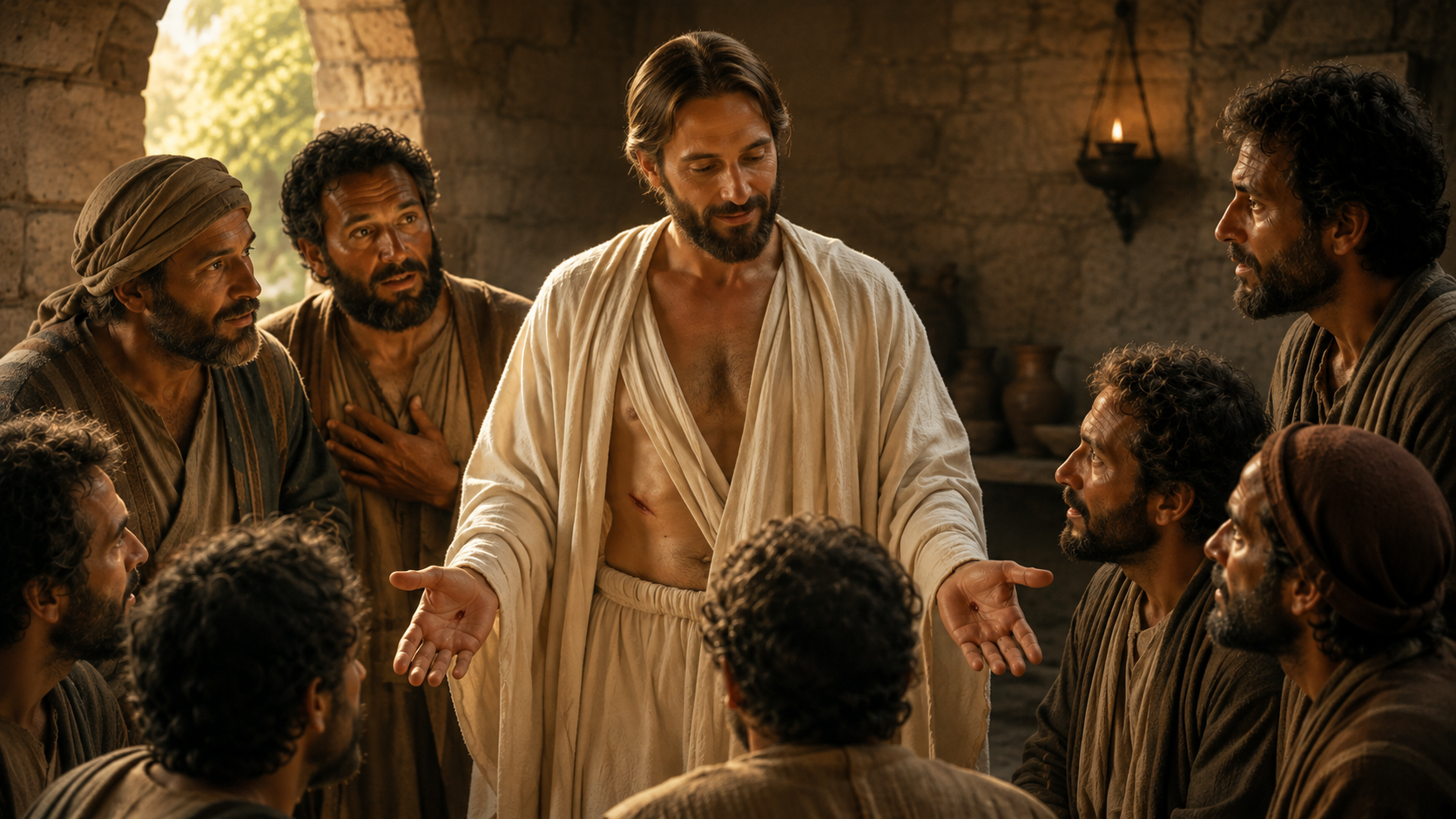
There is a line in the song A Little Child Shall Lead Them that deserves more than a passing hearing: “The lost, the last, the least are gathered home by wounded love that never knows defeat.” Those two words, wounded love, contain much of the gospel.
The Love That Would Not Let Us Go
John 3:16 begins not with man’s sin, judgment, hell, or even the cross. It begins with love: “For God so loved the world, that He gave His only begotten Son.” Father Yahweh did not send His Son because He hated the world and Yeshua persuaded Him to love it. He sent His Son because He already loved the world. The cross therefore did not create God’s love for humanity. The cross revealed it. Yeshua said, “He who has seen Me has seen the Father” (John 14:9). When we see Yeshua touching lepers, forgiving sinners, welcoming children, eating with outcasts, weeping beside a tomb, and forgiving His executioners, we are seeing what the Father is like. Yeshua came from the Father’s heart.
Love Came to Rescue Us—and We Wounded Him
But something astonishing happened when divine love entered our violent world. We wounded it. Yahweh gave His beloved Son to rescue His creatures, and those very creatures rejected Him. Human hands seized Him. Human courts condemned Him. Human fists struck Him. Human voices mocked Him. Human beings drove nails through His hands and feet. Finally, human beings killed Him. John summarizes the tragedy in one sentence: “He came to His own, and those who were His own did not receive Him” (John 1:11). If ever there were a moment when God might have said, “Enough. I am finished with them,” surely Calvary was that moment. But He did not.
Wounded Love Answered, “Father, Forgive Them”
From the cross came one of the most extraordinary sentences ever spoken: “Father, forgive them; for they do not know what they are doing” (Luke 23:34). Think about who “them” included: the people mocking Him, the authorities condemning Him, the soldiers crucifying Him, and the world rejecting Him. Yeshua did not wait until His enemies became His friends before loving them. He loved His enemies while they were still His enemies. Paul understood this when he wrote, “But God demonstrates His own love toward us, in that while we were yet sinners, Christ died for us” (Romans 5:8). This is wounded love. It is love that has every reason to walk away and does not.
The Wounds Remained After the Resurrection
There is something beautiful about the resurrection appearances of Yeshua. He rose victorious, but the wounds were still visible. Thomas was invited to see His hands and His side (John 20:27). The wounds had not defeated Him. They had become witnesses. The risen Christ could in effect say, “You wounded Me. You rejected Me. You killed Me. And I came back—not to destroy you, but to save you.” That changes the way we understand divine judgment. The One who judges humanity is the same One whose hands bear the wounds humanity gave Him.
Isaiah Saw Where This Love Was Going
Centuries before Calvary, Isaiah saw a remarkable world: “And the wolf will dwell with the lamb… and a little boy will lead them” (Isaiah 11:6). Predator and prey are reconciled. Hostility disappears. Fear disappears. Violence disappears. Why? Because “the earth will be full of the knowledge of Yahweh as the waters cover the sea” (Isaiah 11:9). The answer to the world’s violence is ultimately the knowledge of what Yahweh is really like. And Yeshua came to show us.
Love Does Not Ignore Evil
Wounded love is not weak love. A father who truly loves his children does not simply shrug at what is destroying them. Scripture speaks seriously about judgment, correction, fire, discipline, pruning, and purification. But the question is what Yahweh is trying to accomplish through them. Hebrews tells us that He disciplines “for our good, so that we may share His holiness” (Hebrews 12:10). The gardener cuts the vine so that it may bear fruit. The refiner heats the silver so that its impurities may disappear. The shepherd searches for the lost sheep not so that he can punish it for getting lost, but so that he can bring it home. Divine holiness does not mean that Yahweh eventually stops loving sinners. It means His holy love will not make peace with the sin that is destroying them.
The Cross Tells Us Who Wins
This brings us back to that line: “The lost, the last, the least are gathered home by wounded love that never knows defeat.” Humanity did its worst to Love at Calvary, and Love rose from the grave. Hatred could wound Love. Sin could wound Love. Violence could wound Love. Death itself could wound Love. But none of them could defeat Love. Paul therefore looked beyond the cross toward something breathtaking. Through Christ, God purposes “to reconcile all things to Himself… having made peace through the blood of His cross” (Colossians 1:20). Notice those words: all things. And notice how He accomplishes it: through the blood of His cross. The wound becomes the instrument of reconciliation.
Perhaps that is one reason Revelation ends not merely with judgment, but with a city whose gates are never shut, a river of life flowing outward, and a Tree of Life whose leaves are “for the healing of the nations” (Revelation 22:2). The biblical story begins with humanity running away from Yahweh among the trees of Eden. It ends with humanity being healed beside the Tree of Life. Between those two trees stands another tree: the cross. There the world wounded the One who came to save it. Yet He did not abandon the world. He rose. He pursued. He forgave. He reconciled. And He continues seeking the lost until the Shepherd’s work is finished.
Wounded Love Will Have the Final Word
That is the astonishing hope contained in two little words: wounded love. Love that bears scars. Love that disciplines. Love that forgives enemies. Love that searches for lost sheep. Love that heals what sin has broken. Love that refuses to surrender His creation to death. And finally, love that brings us home.
Brother Roger
Leave a Reply